Finstas Are Canceled — Here's Where Teens Are Actually Being Chaotic Now
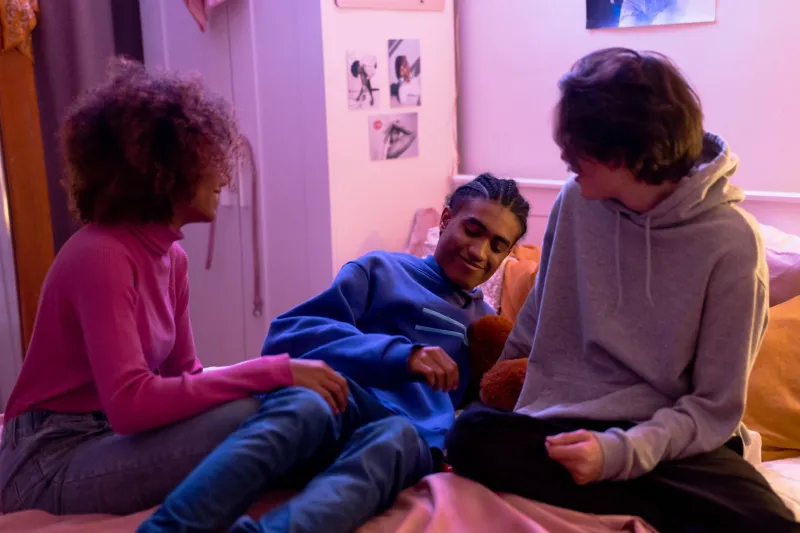
Let's pour one out for the finsta. The fake Instagram account — where you posted your actual face, your actual bad days, your actual chaotic 2 a.m. decisions — was a genuinely brilliant workaround to the performance pressure of the main feed. Your rinsta was curated, glowy, aspirational. Your finsta was you, and only like forty-seven people you actually trusted got to see it.
Then Instagram killed it. Not dramatically, not with a press release, but with a slow accumulation of algorithm changes, parent awareness articles, school counselor warnings, and the general creeping feeling that even your "private" account wasn't really private. And just like that, the finsta era quietly expired.
But here's the thing about teenagers and young people online: they always find a way. The need for an unfiltered space didn't disappear when the finsta did. It just migrated — and where it went is way more interesting.
BeReal Tried to Be the Answer (It Was Not)
When BeReal launched and started going viral in 2022, the pitch was almost too perfect: a two-minute window, a simultaneous front-and-back camera shot, no filters, no do-overs. Authenticity enforced by the app itself. The internet briefly lost its mind over it.
And then... people figured out you could just wait until you were doing something cool to take your BeReal. Or they just started ignoring the notifications entirely. BeReal's fatal flaw was that it tried to manufacture rawness on a schedule, which is, ironically, the least raw thing imaginable. Authenticity doesn't work as a push notification.
The app still has users, but its cultural moment passed faster than most people expected. It became less "unfiltered window into my life" and more "oh right, I should do my BeReal before it expires." Not exactly the revolution they promised.
The Group Chat Is the New Finsta (And It's Thriving)
If you want to understand where real, messy, unedited young-person content lives right now, you have to follow the group chat. Specifically: the iMessage group chat, the Snapchat group, and increasingly, group DMs on Instagram that never touch anyone's main feed.
Group chats have become the dominant space for authenticity because they're genuinely closed. There's no algorithm surfacing your content to strangers. There's no follower count to chase. It's just your people, seeing your actual life — the bad selfie, the unhinged voice memo, the screenshot of the text you're not sure how to respond to.
The Snapchat group specifically deserves its own appreciation post. Snaps disappear (in theory), the vibe is inherently low-stakes, and the format actively discourages the kind of polished content that makes Instagram feel exhausting. Teens never really left Snapchat, and this is a big reason why.
Discord: The Wildest Rebrand in Teen Digital History
If group chats are the new finsta, Discord servers are the new underground. Originally built for gaming communities, Discord has quietly become one of the most important social spaces for Gen Z — and specifically for the kind of niche, identity-driven communities that don't fit neatly into Instagram's grid.
Private Discord servers function like invitation-only clubs. There are servers for specific fandoms, for friend groups, for people who share very specific interests that they might not broadcast publicly. The conversation is real-time, the culture is dense with in-jokes, and the barrier to entry (actually getting an invite) filters out the casual lurkers.
For a lot of young people, their Discord server is where their real personality lives. It's where they workshop opinions before they're ready for public consumption, where they process things with people who actually get it, and where the content is genuinely unfiltered in a way that no public platform can replicate.
Close Friends Lists: The Compromise Nobody Talks About
Instagram's "Close Friends" story feature — the one with the green ring — has become a surprisingly significant middle ground. It's not as private as a group chat, but it's curated enough that people feel comfortable posting things they'd never put on their main story.
The Close Friends list has basically become the spiritual successor to the finsta without requiring a second account. You get to be a little more real, a little more weird, a little more human — but you control exactly who's on the list, and you can remove people without them knowing. It's the finsta's vibe with less administrative overhead.
The flip side? People take their Close Friends placement very seriously. Getting added to someone's Close Friends list is a genuine social signal. Getting quietly removed is a whole thing. The drama has simply migrated from the finsta to the green-ring story, and honestly, same energy.
What This All Actually Means
The finsta didn't die because young people stopped wanting to be real online. It died because the platforms caught up, and because the audience for "authentic" content grew until it stopped feeling authentic. The need for an unfiltered space is permanent — it's just shapeshifting constantly to stay one step ahead of the algorithm, the parents, and the brand partnerships.
What's genuinely interesting about the current moment is how fragmented the authentic internet has become. There's no single finsta equivalent because there's no single space that feels safe and private and real. Instead, authenticity lives in a dozen different places simultaneously — the group chat, the Discord server, the Close Friends story, the voice memo sent at midnight.
And honestly? That fragmentation might be healthier than a single fake-but-real account ever was. Or it might just be more exhausting to keep track of. Probably both.